


Blepharoplasty (Eyelid Surgery)
Eyelid surgery that removes excess skin and fat hernias of the upper and lower eyelids, reducing puffiness and giving the eyes a rested look. It suits patients with age-related eyelid changes or a hereditary tendency to under-eye bags.
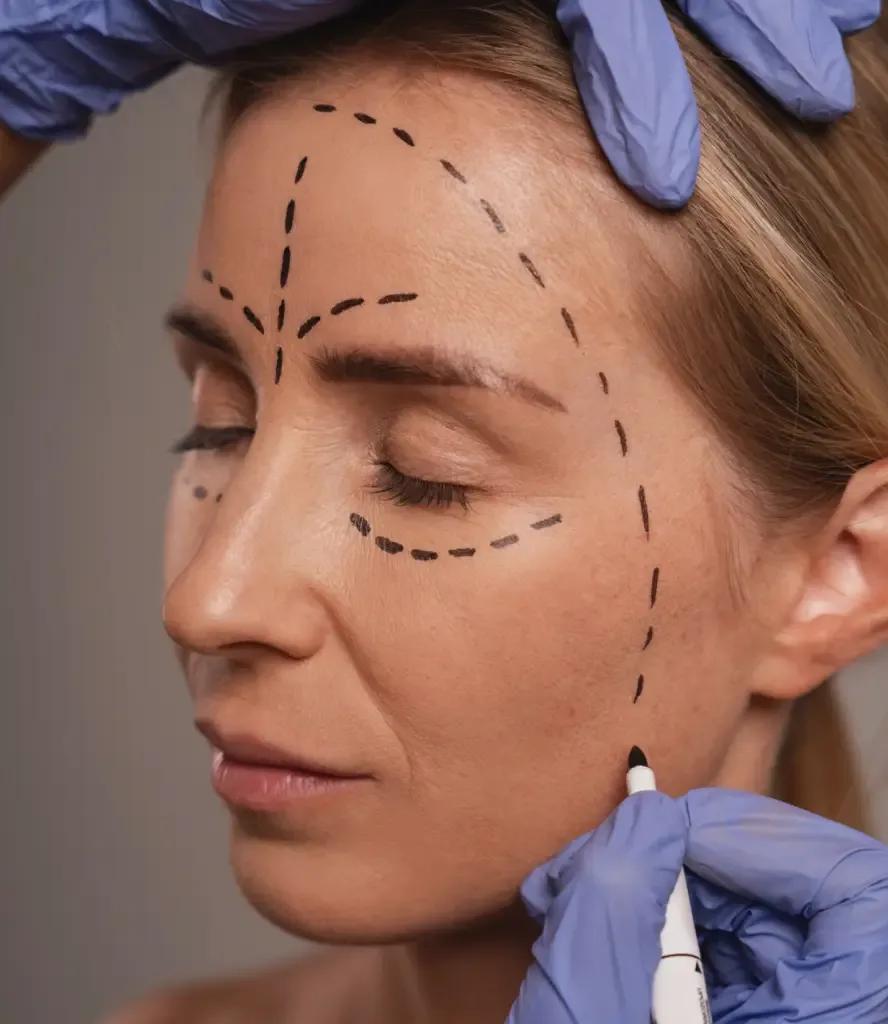
Blepharoplasty is an eyelid correction surgery that removes excess skin and fat hernias of the upper and lower eyelids, which give the eyes a tired or puffy appearance. When only lower-lid hernias need correction, a transconjunctival technique without external incisions or visible scars can be used.
How the surgery is planned and performed
The process starts with a consultation: the surgeon examines your eyelids, assesses the skin and the distribution of the fat pads, and together with you defines the scope of the operation — the upper, the lower, or all four eyelids. For international patients, an initial consultation can be held online before travelling to Kyiv, so the surgical plan, the price, and the length of stay are agreed in advance. Routine laboratory tests are required before surgery, and an ophthalmology consult is added when indicated; smoking should be stopped about two weeks beforehand.
The procedure is performed under local anesthesia, with sedation available on request, and usually takes about 1–2 hours depending on the extent. Excess skin is removed through an incision hidden in the natural crease of the upper eyelid or along the lash line of the lower eyelid; when there is no skin excess, lower-lid hernias are removed transconjunctivally — through the inner surface of the eyelid, with no external sutures.
You will stay under observation at the clinic for a few hours after surgery and return home the same day. Swelling and bruising are expected during the first days and are relieved with cold compresses and sleeping with your head elevated; sutures come out on day 5–7. Most patients return to a desk job within 7–10 days and to intensive exercise after 3–4 weeks.
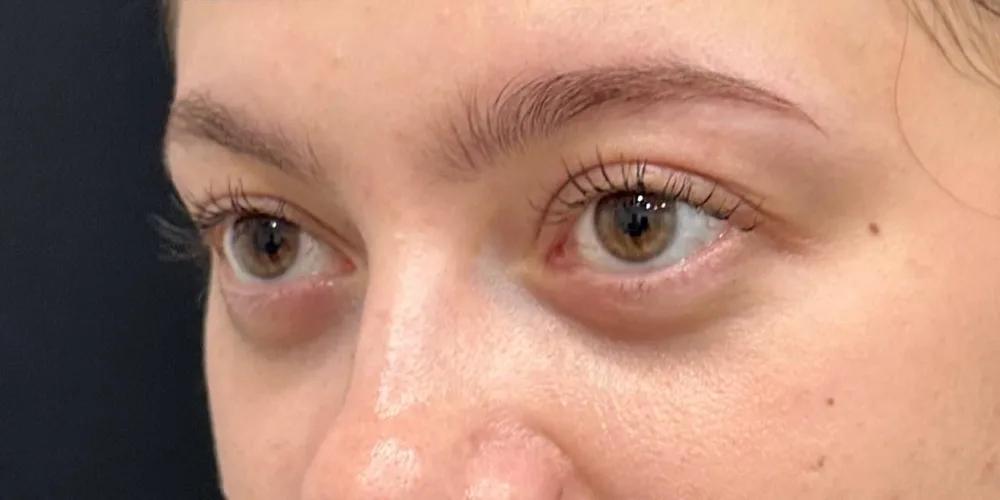
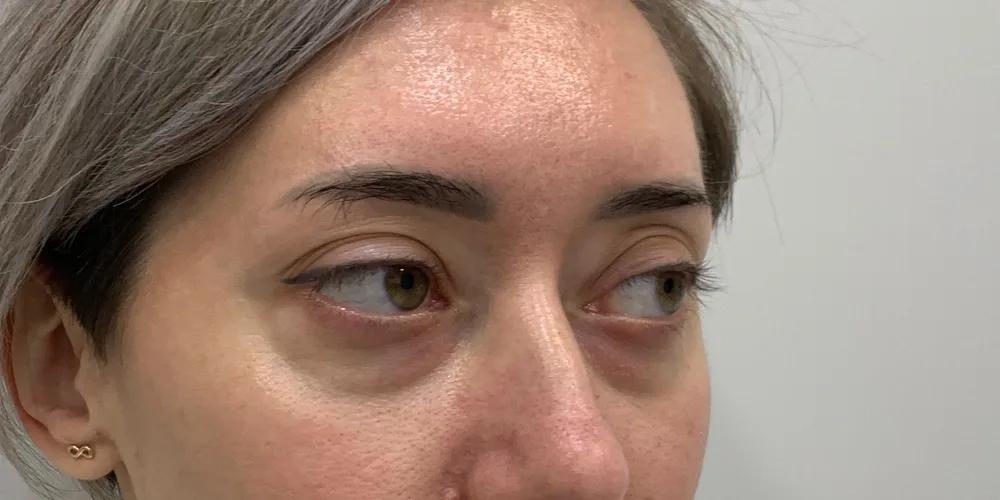
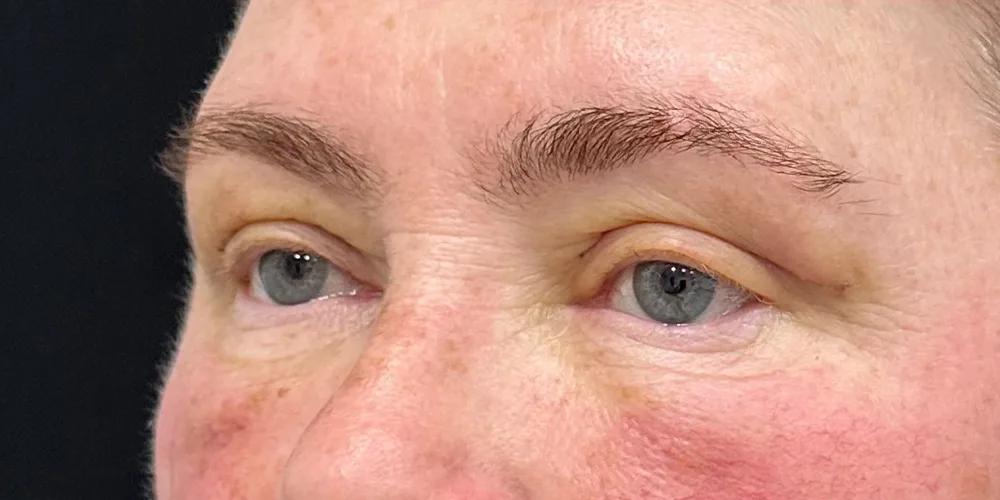
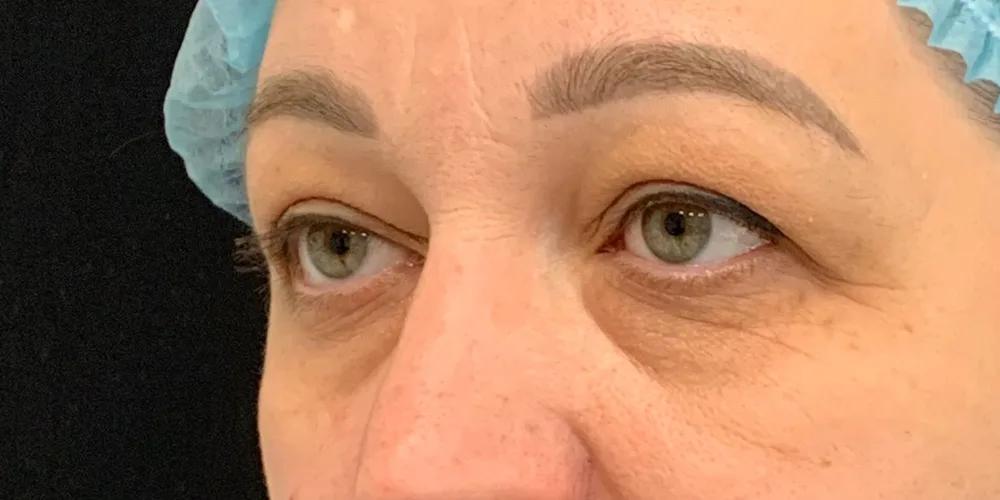
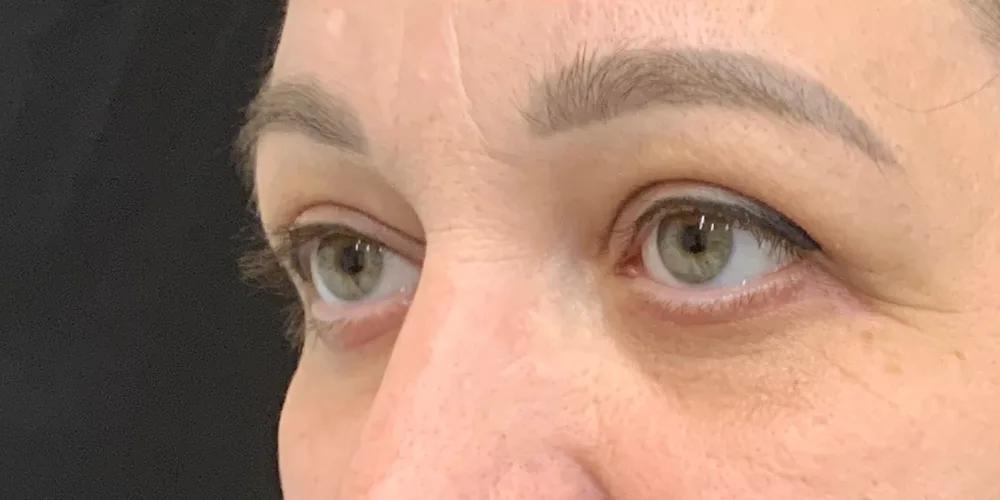
A realistic outcome is a rested, more open look, the disappearance of under-eye bags and, when heavy upper lids are corrected, a wider field of vision. Scars fade over several months and become barely noticeable; with the transconjunctival technique there are no external traces at all. Since natural aging continues, the result stays stable for years rather than decades.
Indications
- Excess skin on the upper eyelids that gives a tired look or narrows the visual field
- Fat hernias (bulging fat pads) of the upper and lower eyelids
- Bags and persistent puffiness under the eyes
- Tear troughs (grooves) of the lower eyelids
- Eyelid asymmetry
- Age-related stretching and wrinkling of the eyelid skin
Contraindications
- Acute inflammatory eye conditions (conjunctivitis, blepharitis) — surgery is postponed until recovery
- Decompensated diabetes mellitus
- Blood clotting disorders
- Pregnancy and breastfeeding
- Severe cardiovascular or autoimmune diseases in the acute stage
How the operation goes
From the first consultation to follow-up visits.
Consultation with the surgeon: eyelid examination, medical history, discussion of the expected outcome
Pre-operative work-up: laboratory tests; an ophthalmology consult if indicated
Surgery under local anesthesia (sedation available on request); usually takes about 1–2 hours
Monitoring at the clinic for a few hours after the procedure
Suture removal and follow-up visit 5–7 days after surgery
Week-by-week recovery
Timeframes are approximate: the individual recovery plan is set at the consultation.
Early recovery
Swelling and bruising, a feeling of tightness; cold compresses help. Sutures are removed on day 5–7.
Back to routine
Swelling and bruising subside; you can return to a desk job without physical exertion.
Gradual recovery
Scars fade, moderate exercise is allowed; intensive workouts remain restricted.
Result taking shape
Residual puffiness is minimal, the eyelids settle into their final contour, and scars become increasingly inconspicuous.
Final result
Scars fade completely and the stable outcome of the surgery is established.
Frequently asked questions
How much does blepharoplasty cost?
Guide prices: upper blepharoplasty under local anaesthesia from $1150, lower blepharoplasty from $1500, all four eyelids from $2750. The final cost is set at the consultation and depends on the extent of surgery (upper, lower, or all four eyelids) and the technique used.
Is the surgery painful?
You will not feel pain during the procedure, as it is performed under local anesthesia. For the first few days after surgery you may experience discomfort and a feeling of tightness in the eyelids, which is managed with standard painkillers.
Will the scars be visible?
Incisions are placed within the natural crease of the upper eyelid and along the lash line of the lower eyelid, so the scars become virtually invisible over time. With the transconjunctival technique for removing hernias there are no external incisions at all — the approach is made from the inside of the eyelid.
When can I return to work and exercise?
Most patients return to a desk job within 7–10 days, once the swelling and bruising have subsided. Intensive physical activity and sports are usually allowed after 3–4 weeks.
Is the result permanent?
Removed hernias do not come back and excess skin does not reappear. However, natural skin aging continues, so the result remains stable for many years without stopping age-related changes.
Results: before and after
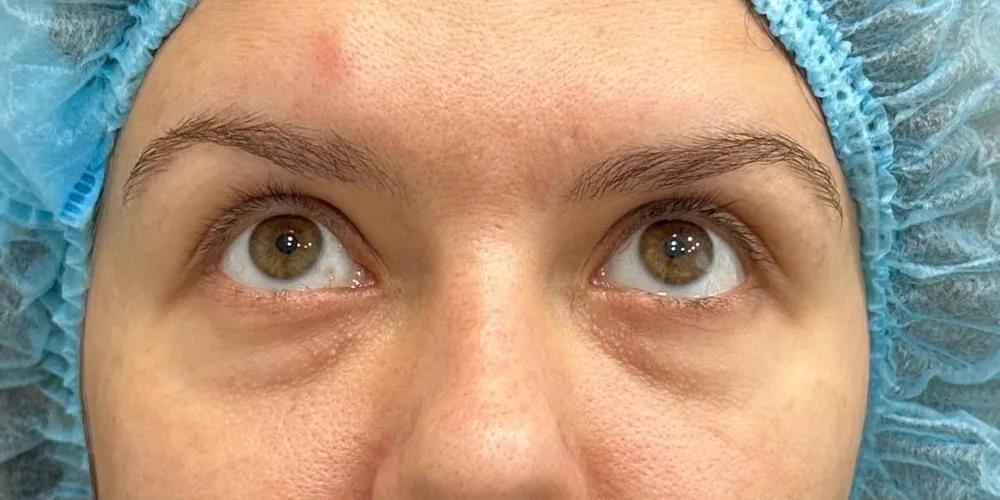 Before
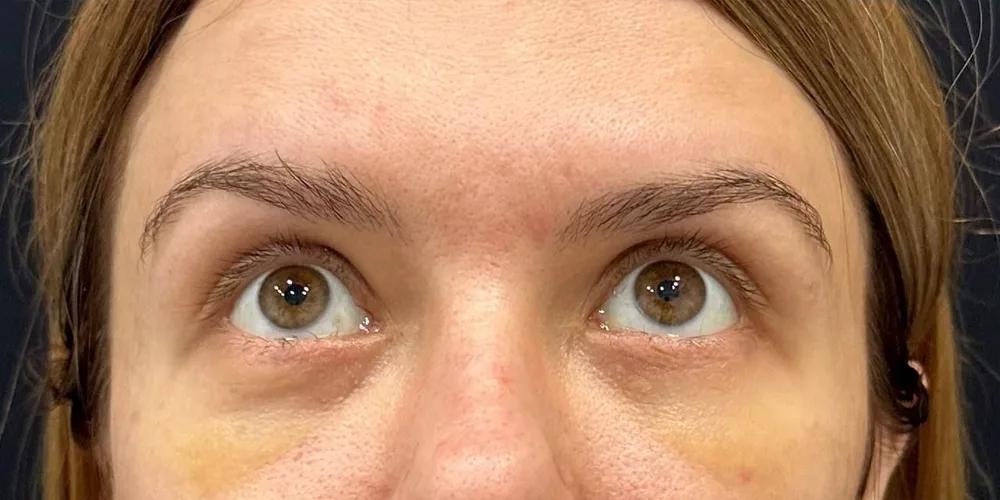 After
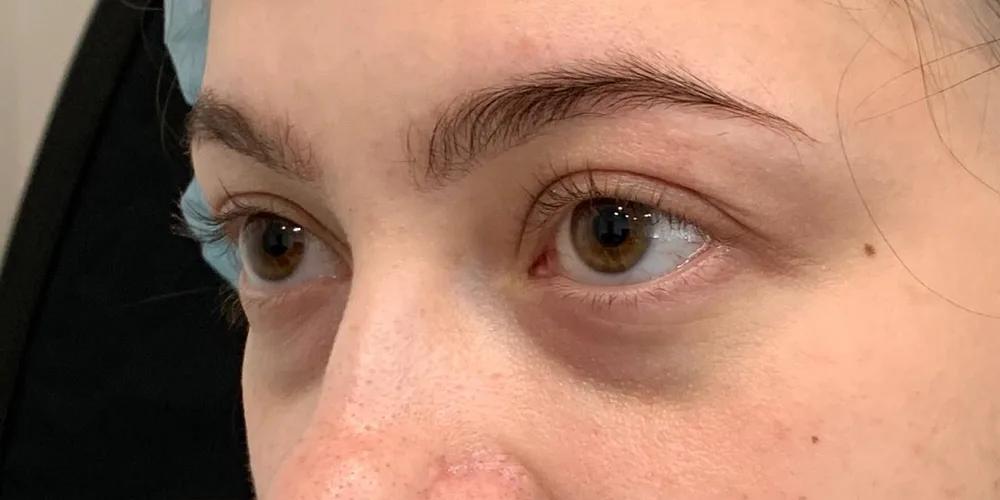 Before
 After
 Before
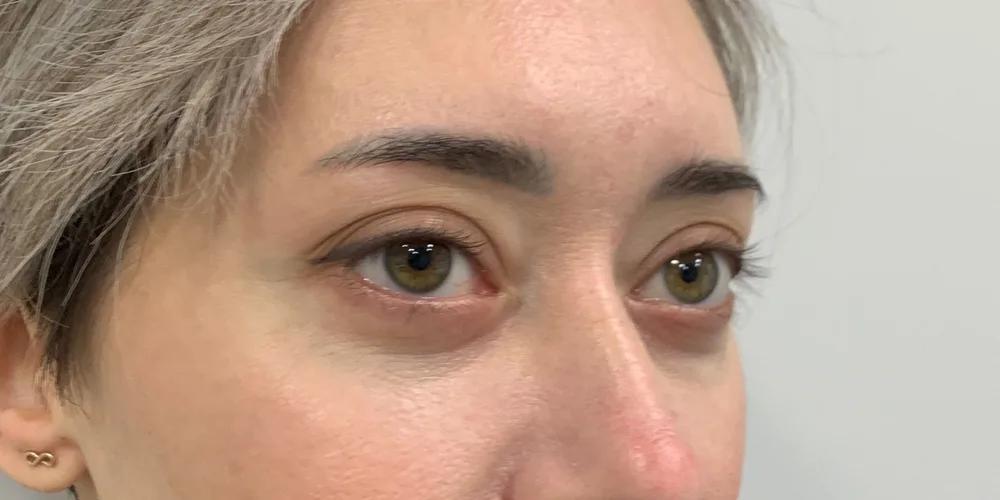 After
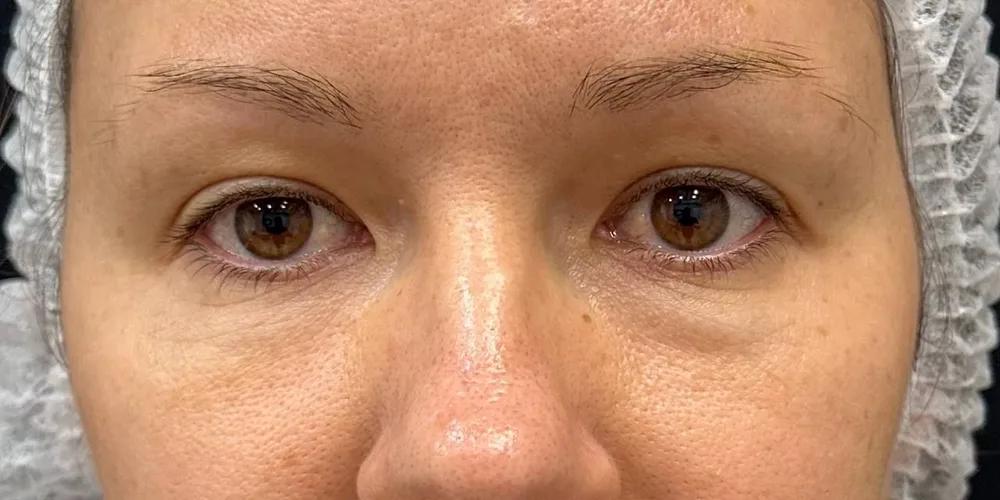 Before
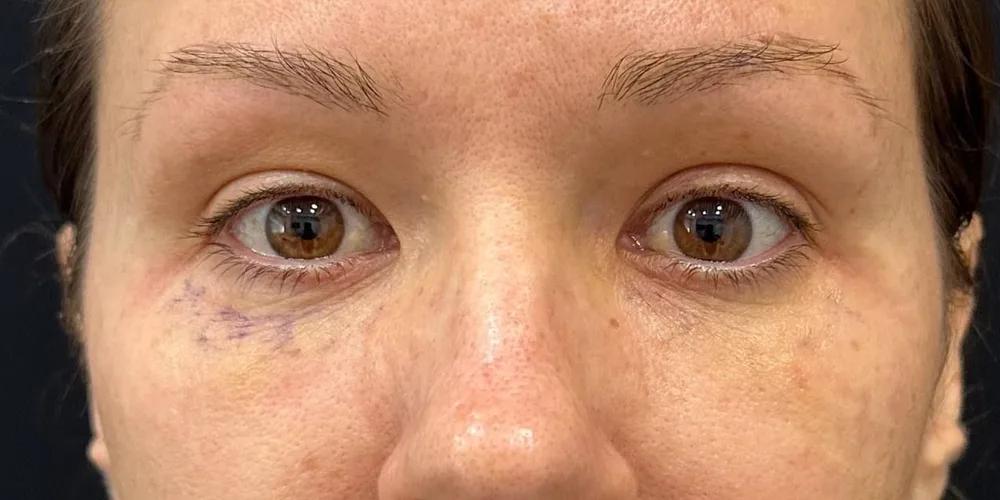 After
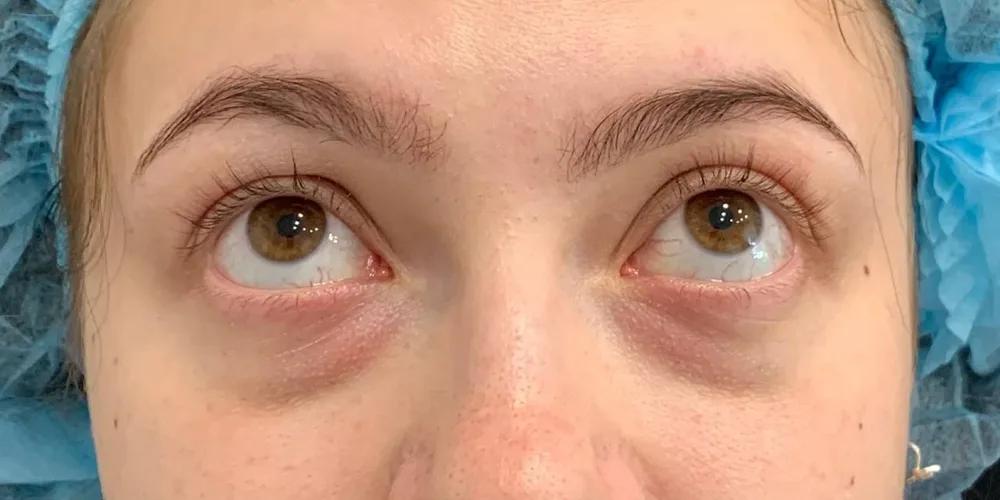 Before
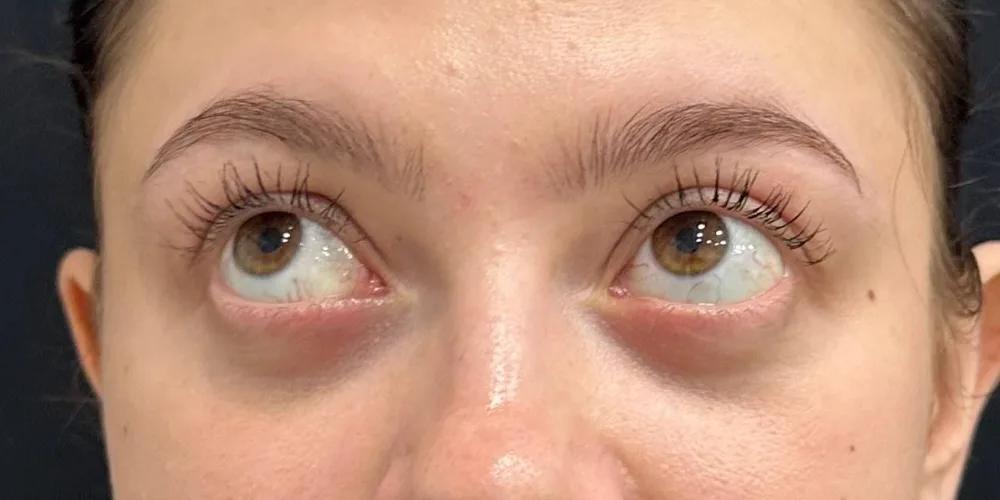 After
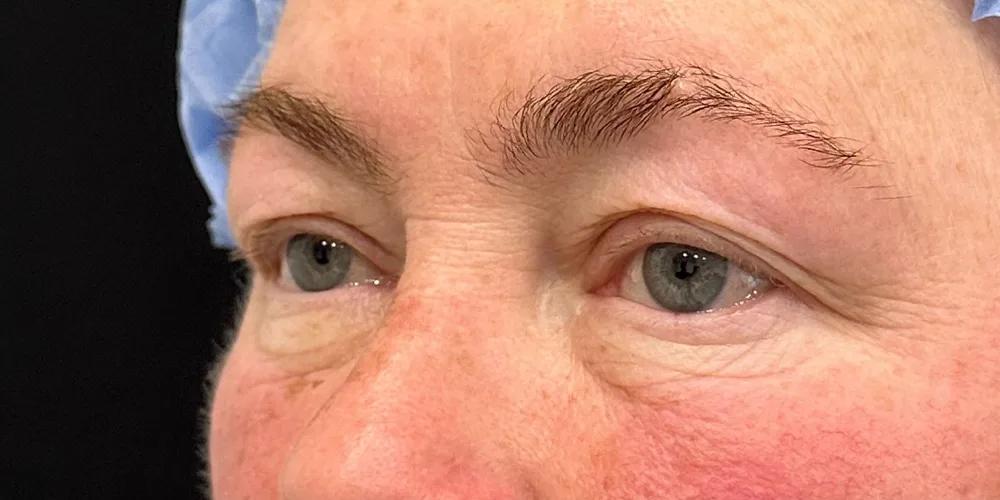 Before
 After
 Before
 After
Patient reviews
I had my blepharoplasty under local anesthesia — forty minutes, fully aware the whole time. Stitches came out on day seven; on day ten I attended an important presentation in dark glasses. The result looks like I spent two weeks at the seaside, not like surgery. I am sincerely grateful for the honesty: they first advised postponing for six months because of my unstable blood pressure — and it was the right call.
Useful articles
Other procedures in this area
Face and Neck Lift
Face and neck lift is a radical rejuvenation surgery that repositions the deep tissue layers, giving a stable result of 8–12 years. It is indicated for pronounced tissue ptosis, deep nasolabial folds and changes in the facial oval and neck contour.
Brow lift (endoscopic)
Endoscopic brow lift is a minimally invasive procedure to correct brow position and smooth forehead wrinkles through mini-incisions in the hairline under video control. It is indicated for brow ptosis, heavy upper eyelids and pronounced horizontal forehead lines.
Consultation with the surgeon
We will discuss your goal, show similar cases and name the exact price.